
Released in July 2026, the Turtle Beach Command Series MC7 arrives as a high-end peripheral attempting to blend cutting-edge specifications with unconventional features. Priced at $159.99 / £139.99 / AU$249.95, this premium peripheral sits in a competitive tier alongside elite rivals, though its unique design choices generate distinct drawbacks alongside its strong technical capabilities.
Performance and Specifications
Under the hood, the MC7 targets competitive players through a robust feature set. It utilizes true 8K polling with 0.125ms latency, paired with a 30K DPI Owl-Eye optical sensor and Titan Optical Switches boasting adjustable debounce and a 150 million-click lifespan. Testing with Counter-Strike 2 demonstrates that these hardware choices deliver rapid tracking speed, precise aim, and ultra-smooth movement.
Further enhancing its functionality is a 4D scroll wheel that enables dynamic shifting from small steps to free-spin scrolling, plus left and right clicking capabilities. Connectivity options span 2.4GHz wireless, Bluetooth, and wired modes, supported by the Swarm II companion software for extensive button mapping, haptics adjustments, and lighting customization.
Design and the Touchscreen Dilemma
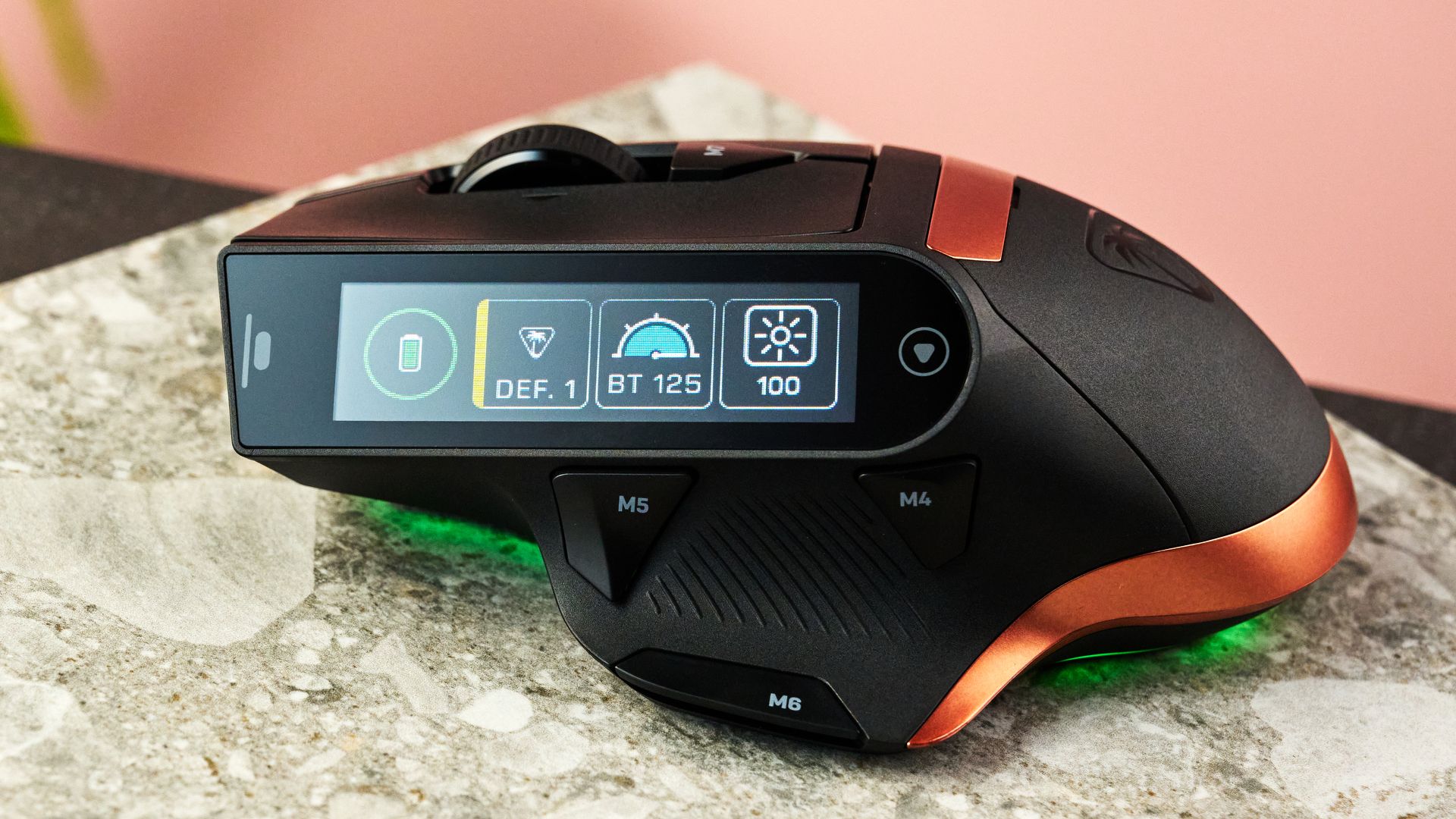
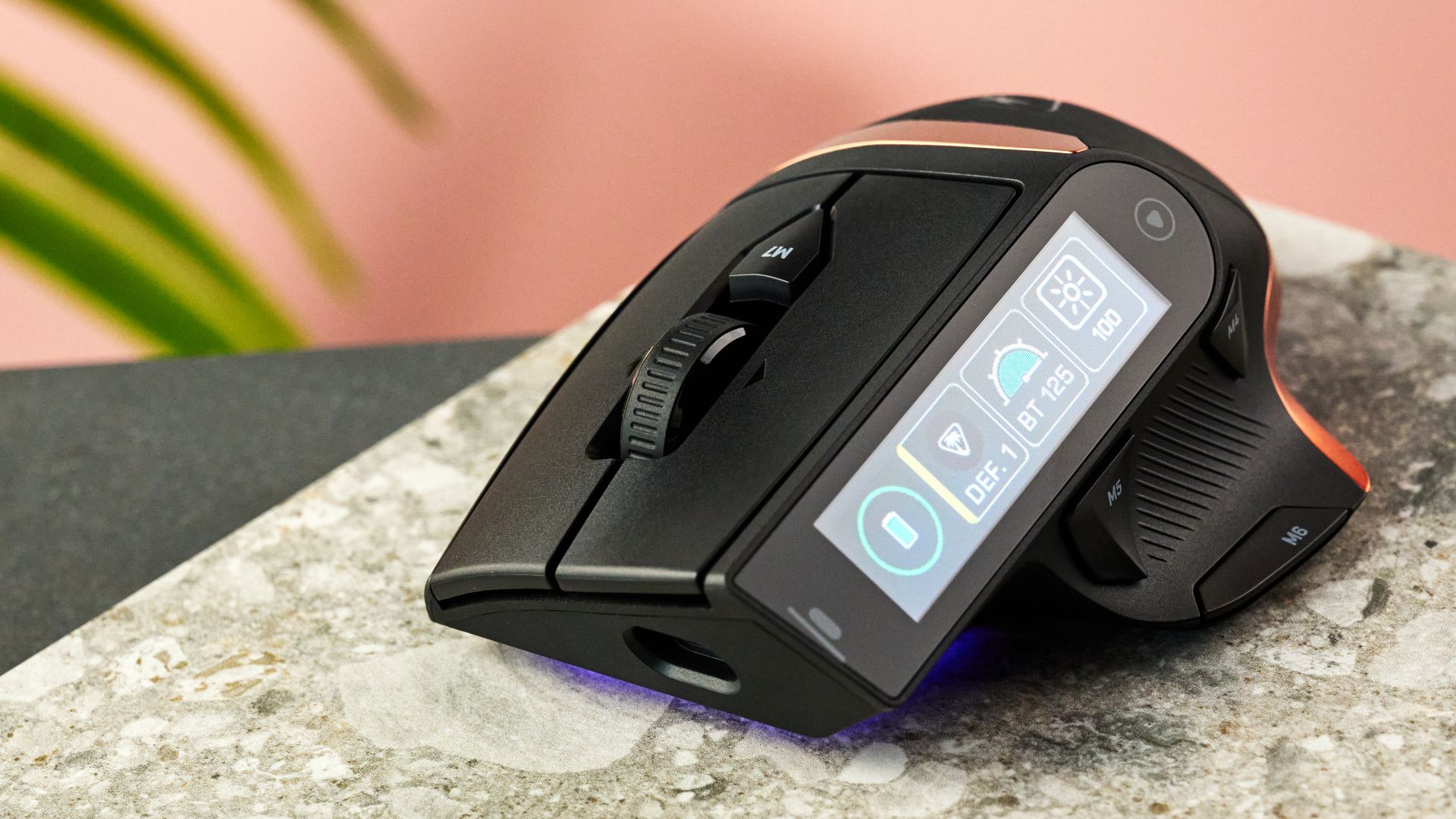
The defining physical characteristic of the MC7 is its integrated touchscreen. While bright and responsive, the small display feels awkward for thumb use, and its core functions—such as polling rate adjustments or media controls—can easily be mapped to physical buttons or standard keyboard shortcuts.
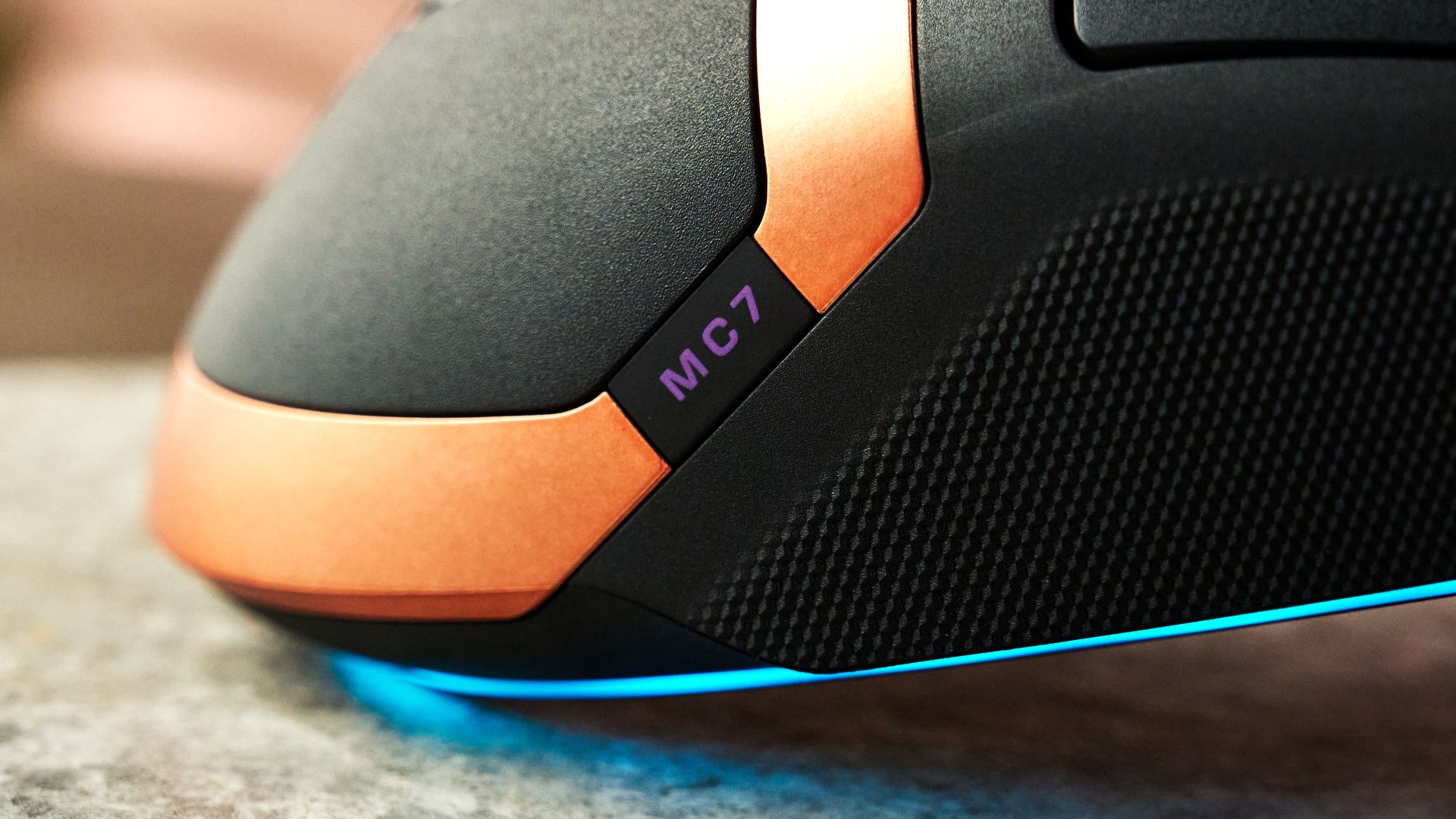
Beyond the screen, ergonomics and aesthetics present separate hurdles. Weighing 4.8oz (135g) and measuring 5 x 3.4 x 1.8 inches (127.7 x 85.3 x 45.9mm), the mouse feels large and heavy, making it less suitable for users with smaller hands or those favoring lightweight gear. Aesthetically, the blend of bronze accents, a purple touchscreen, black chassis, and LED lighting yields a somewhat garish and disjointed appearance.
Battery Innovation and Verdict
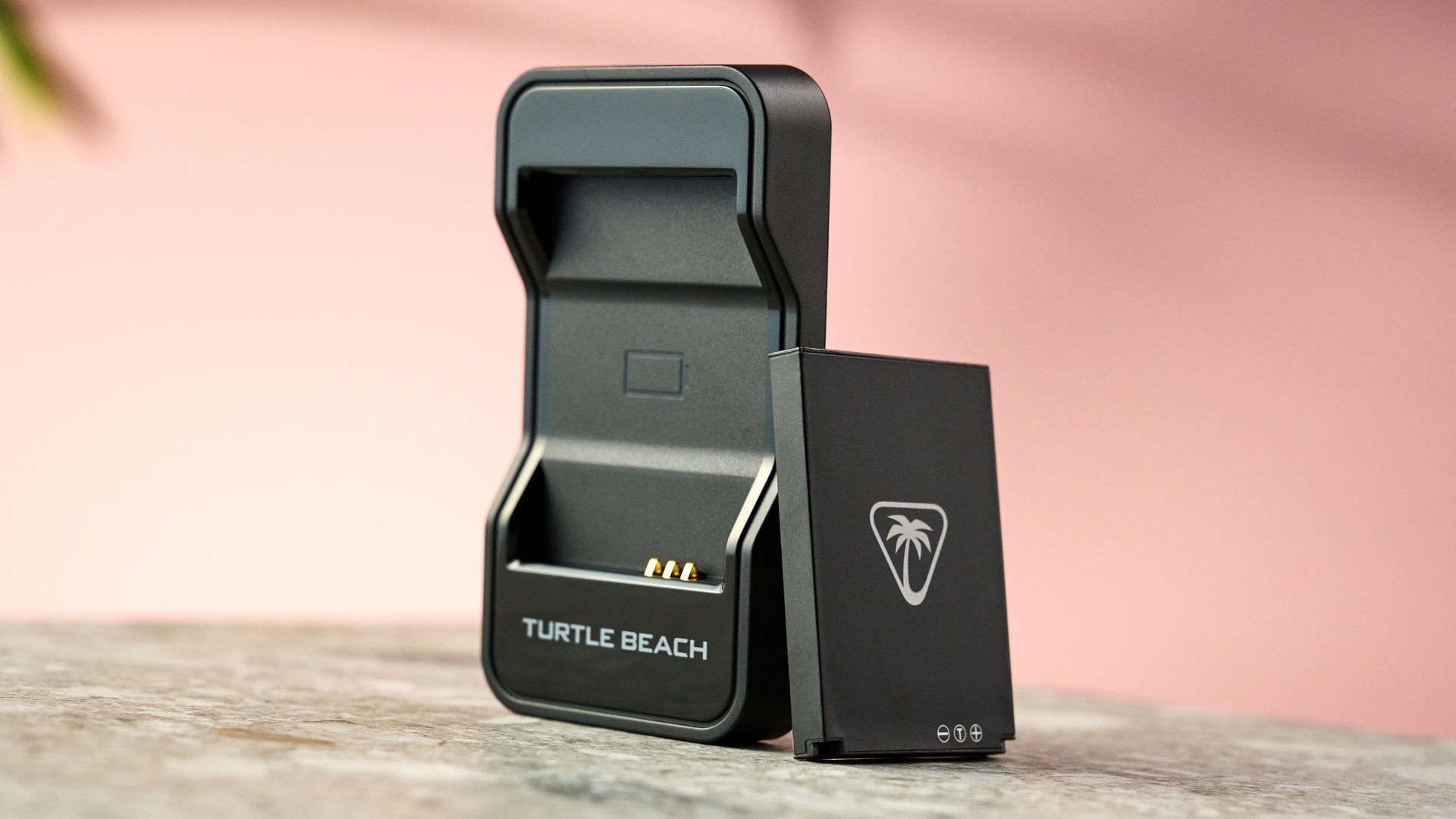
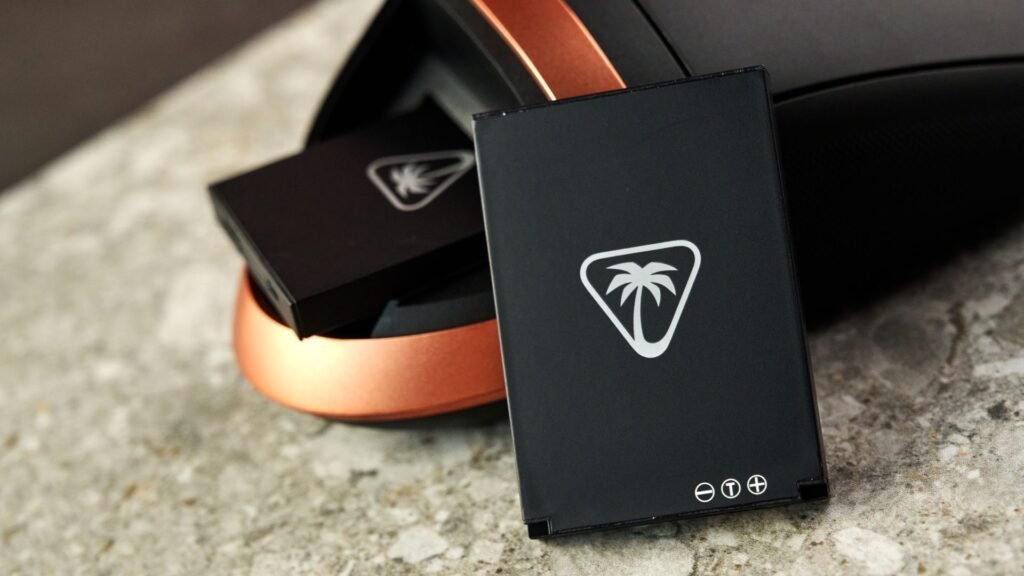
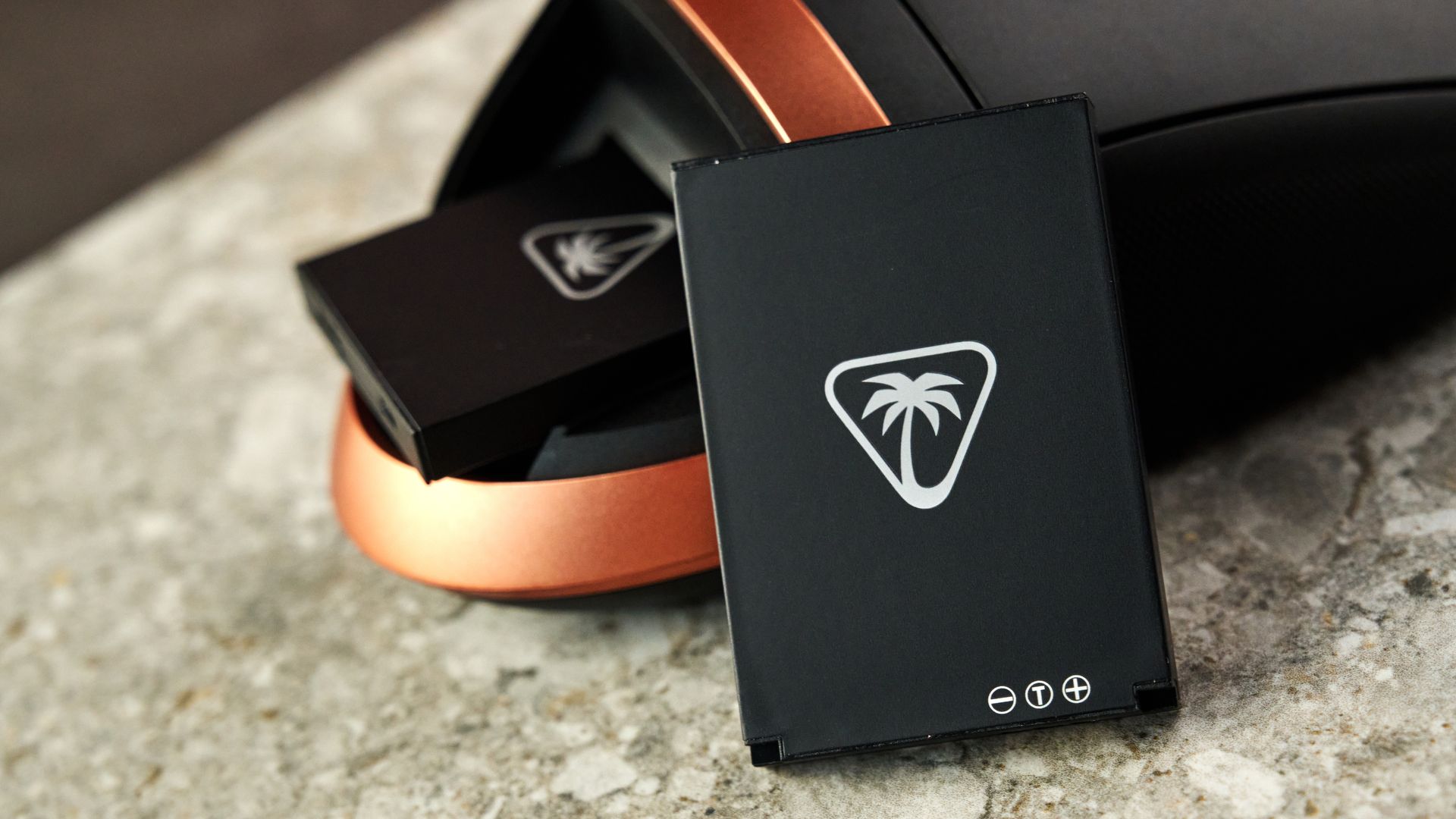
One standout hardware achievement is the hot-swappable battery system. The wireless transmitter houses a secondary battery that charges during use, allowing users to quickly swap power cells for virtually uninterrupted gaming sessions.
Despite its clever power solution and impressive sensor performance, the MC7 struggles to justify its steep price tag due to its hefty build, unconventional looks, and superfluous screen. Buyers prioritizing lighter builds and superior overall value may find top-tier alternatives from competitors more compelling.