
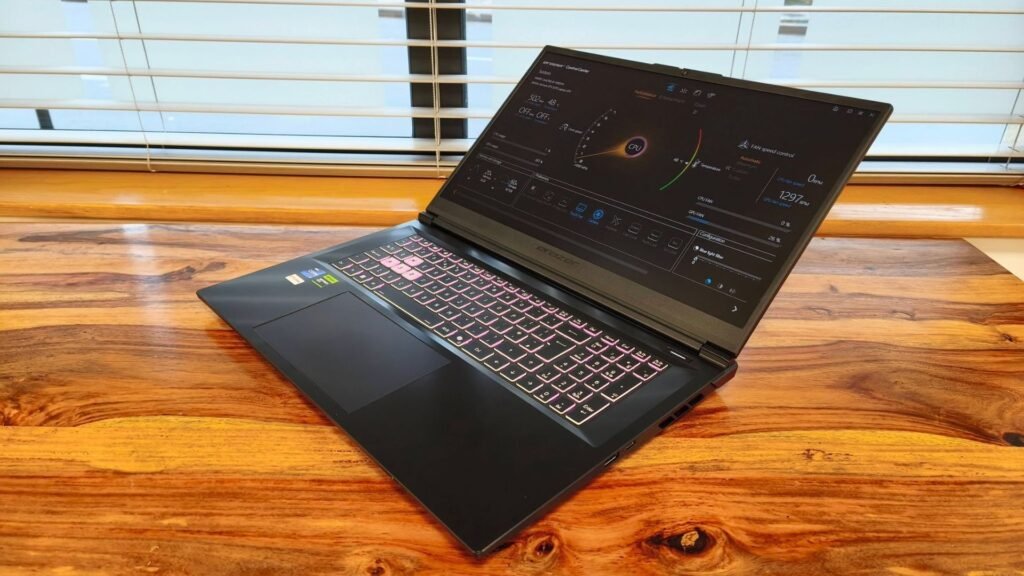
The Medion Erazer Defender 17 P10 arrives in the UK market as a large-format gaming laptop designed to deliver robust performance without commanding an ultra-premium price. Starting at £1,649.99 for the base model, it provides a cost-effective route into high-end mobile processing and graphics, though buyers must make concessions regarding portability, build materials, and battery longevity.
Design and Build Quality
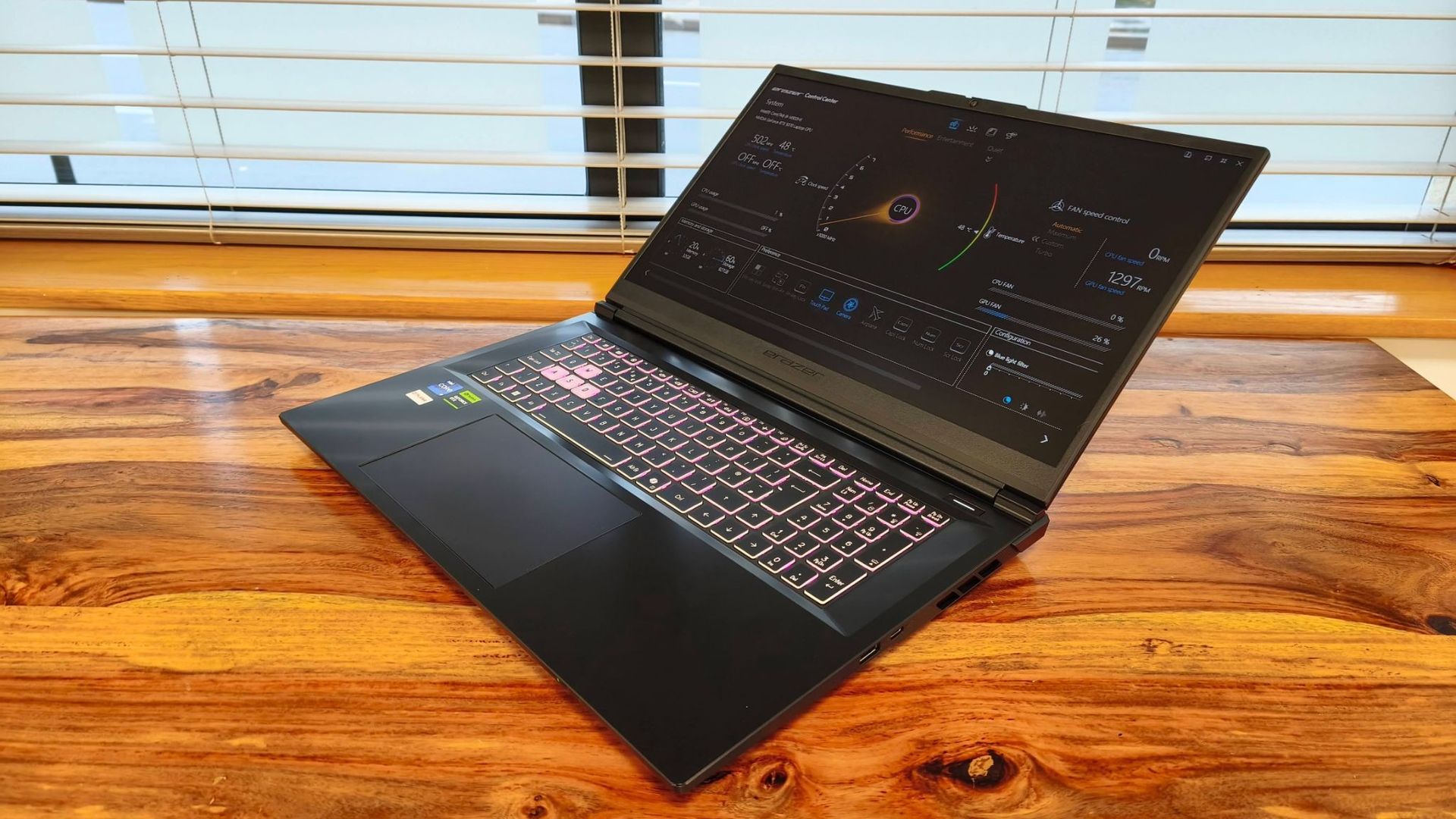
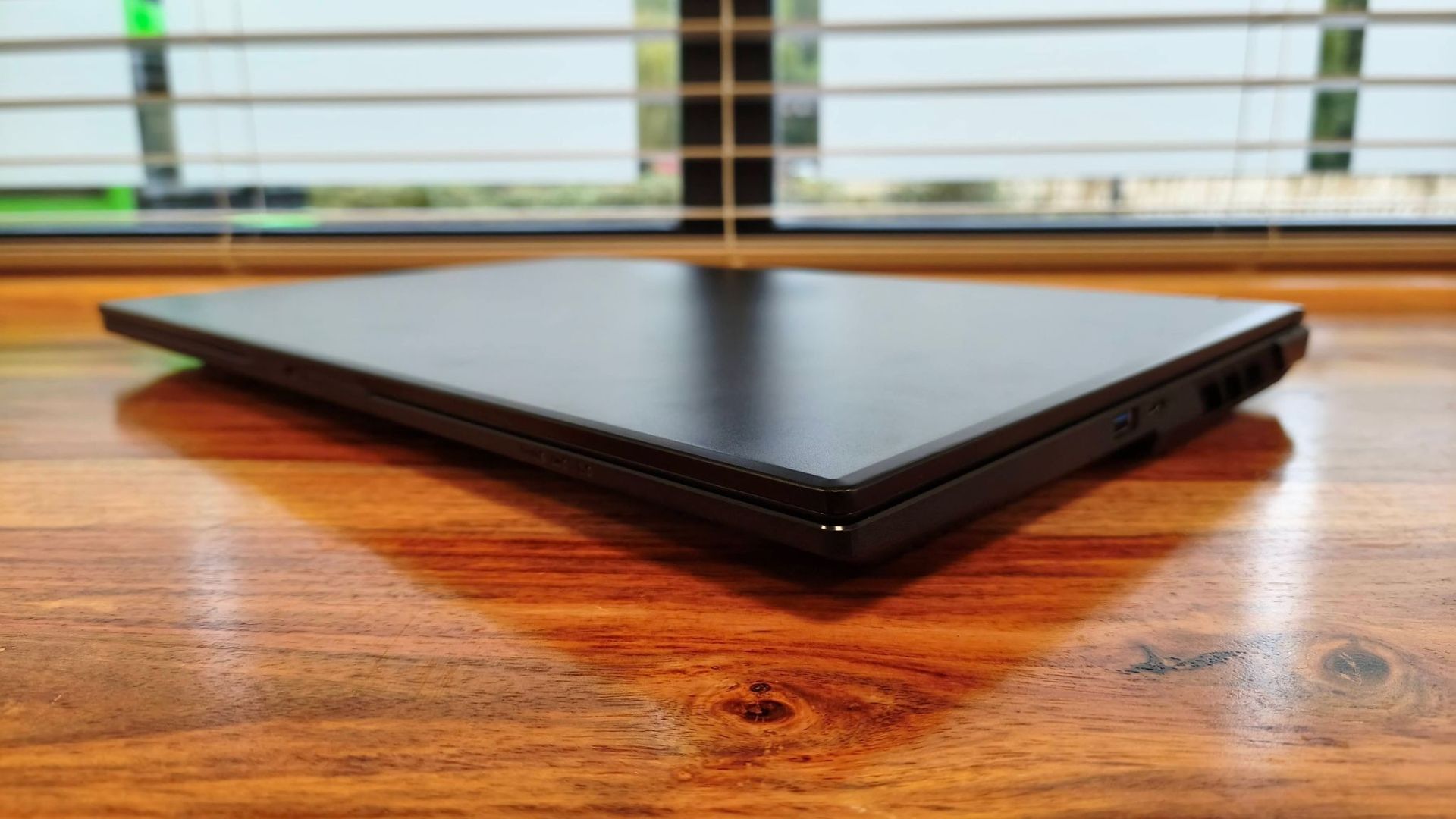
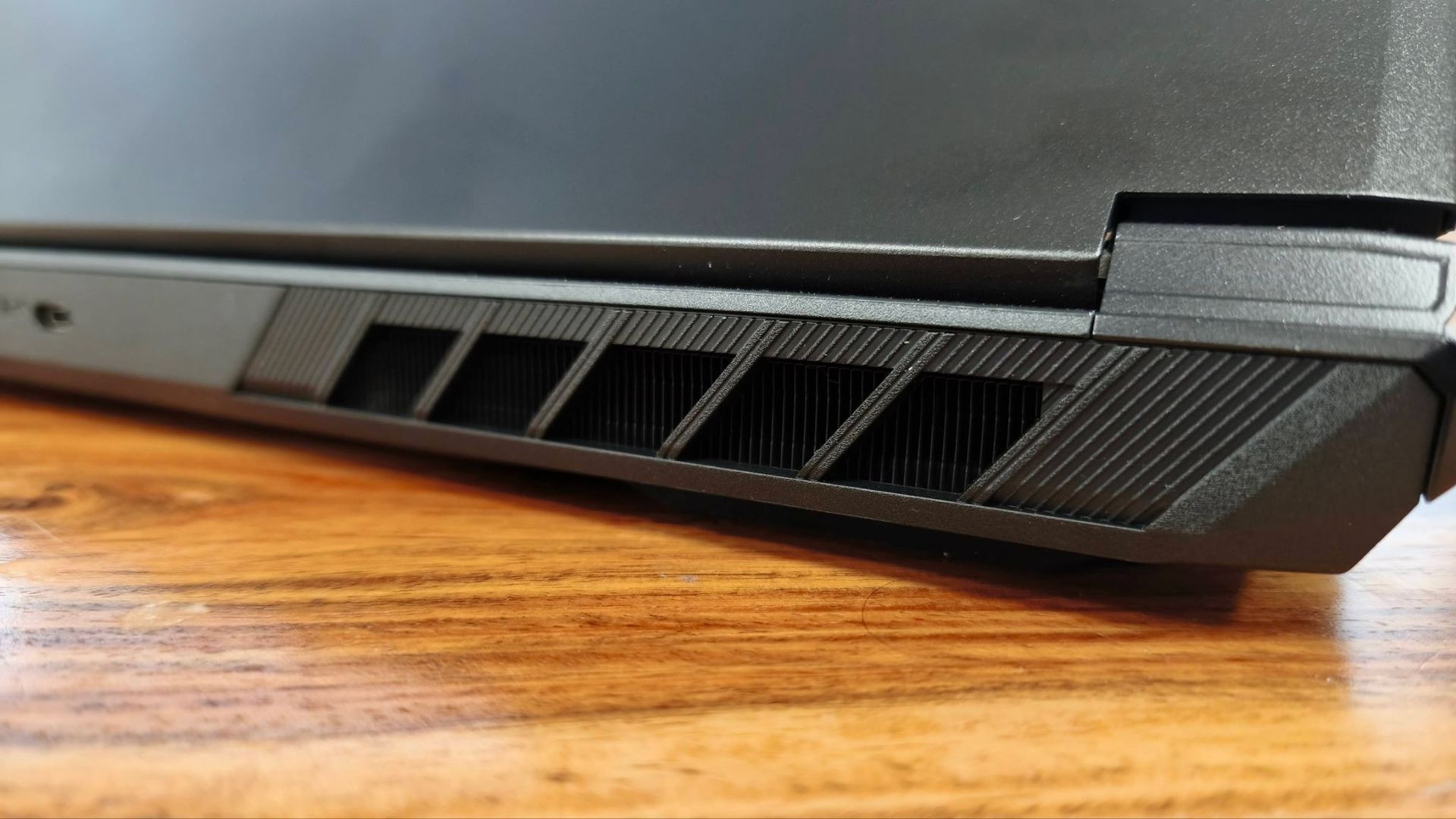
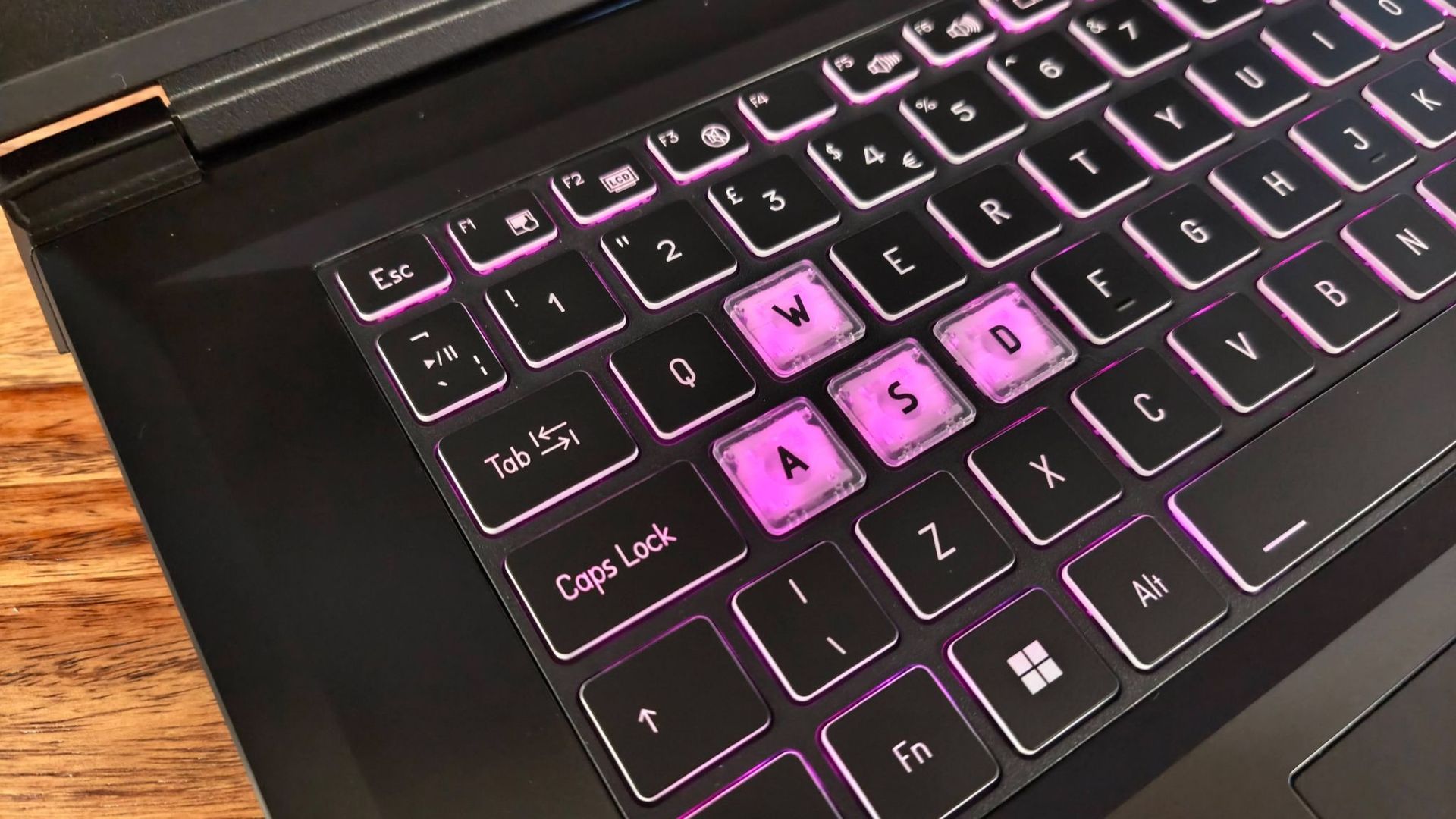
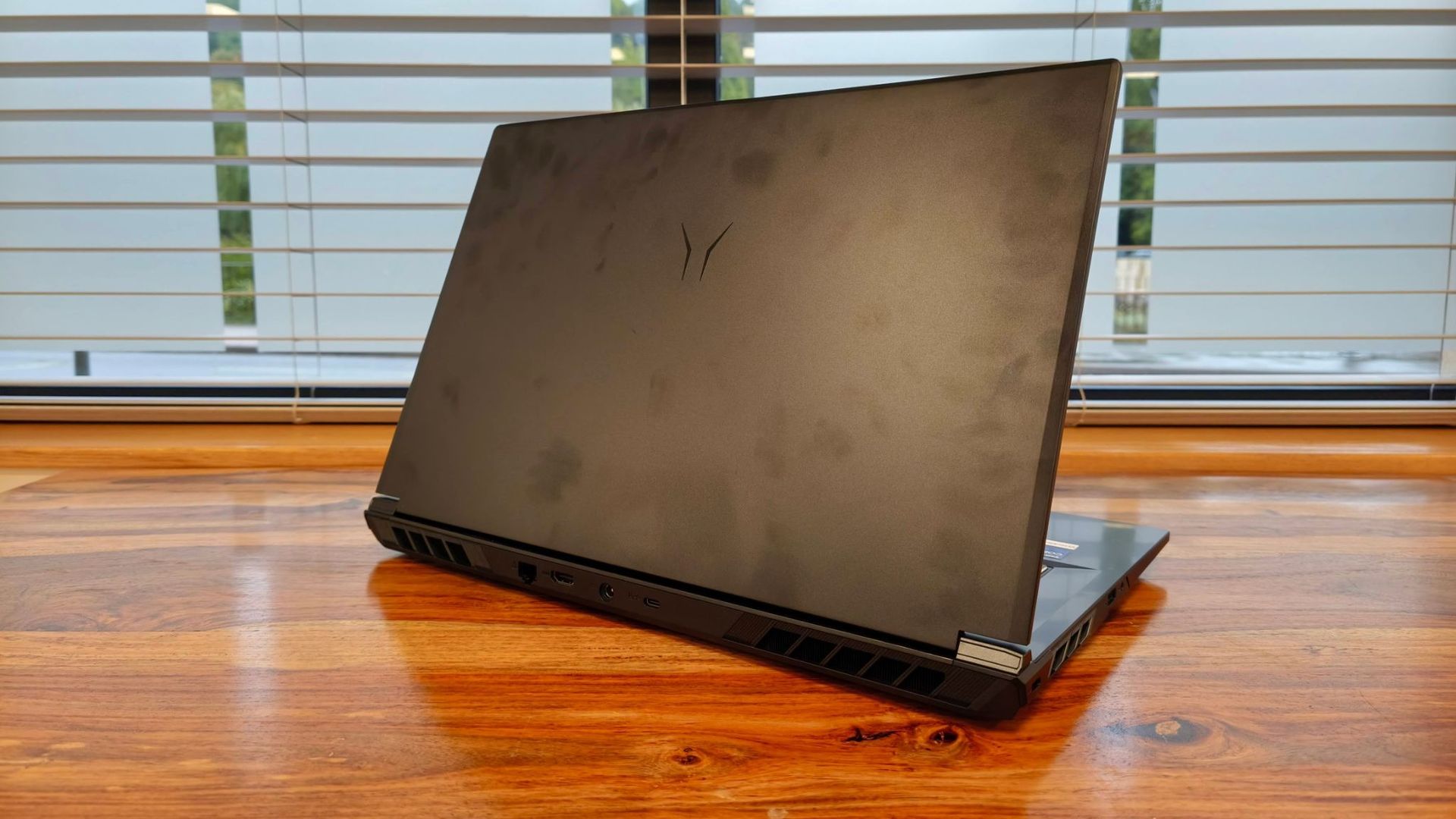
Aesthetically, the machine leans heavily into a utilitarian aesthetic. Aside from an RGB keyboard and subtle angles carved around the ventilation grills, the chassis lacks striking visual flair. The device relies on non-premium materials, yet the overall structure feels reassuringly solid despite a noticeable amount of flex across the keyboard deck. That flexibility actually serves a secondary purpose, acting as a cushion that absorbs the impact of heavy keystrokes.
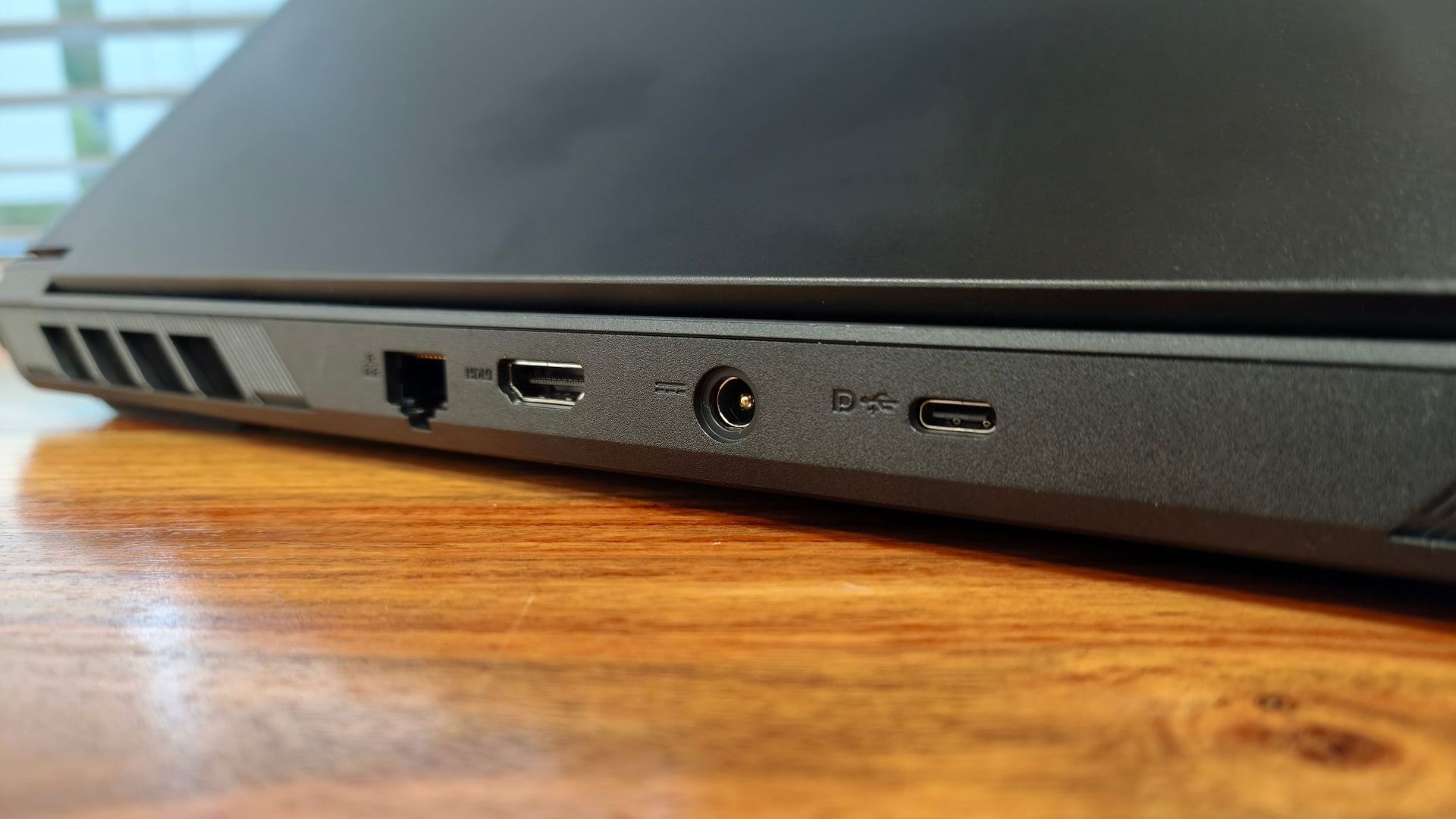
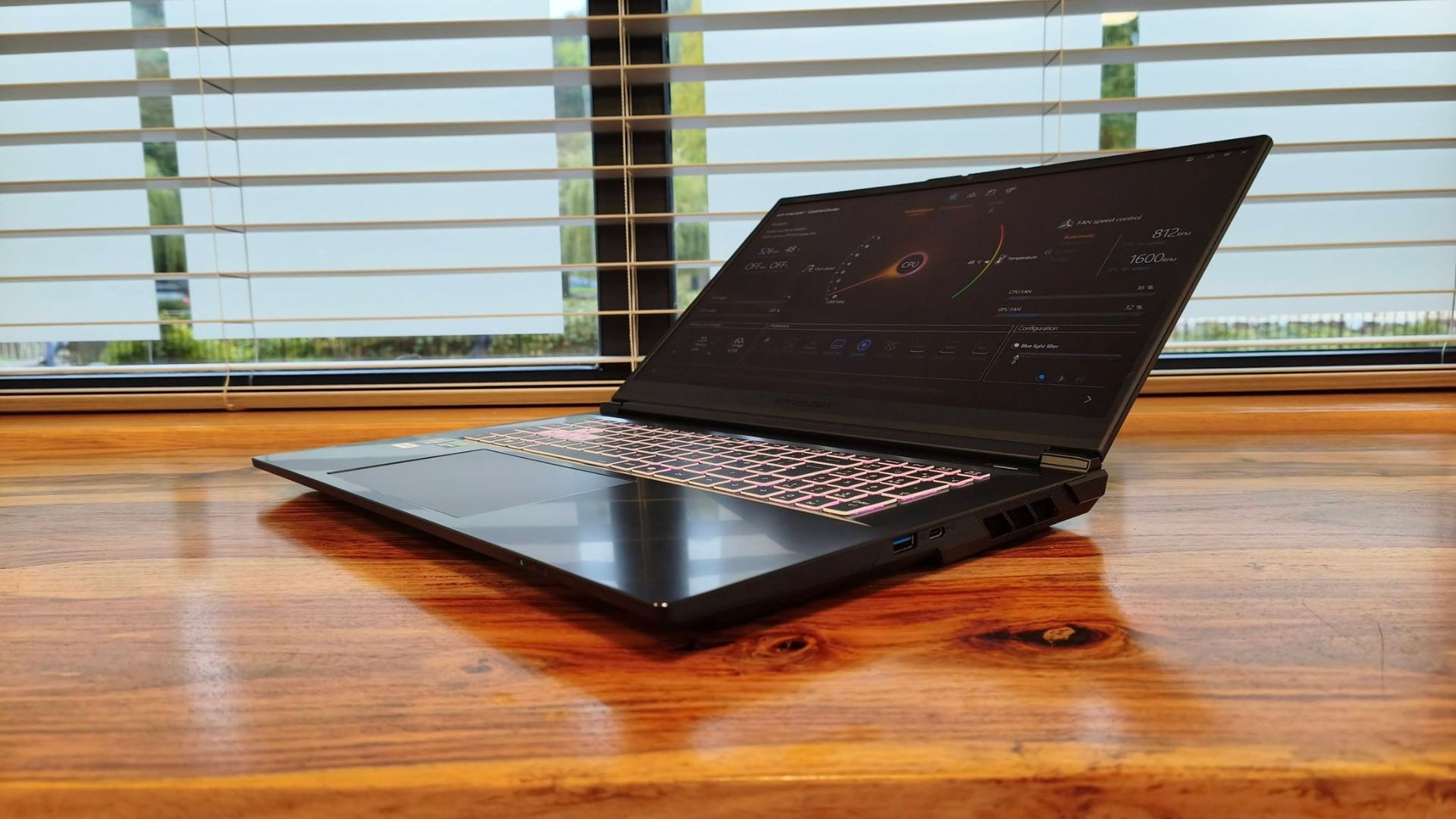
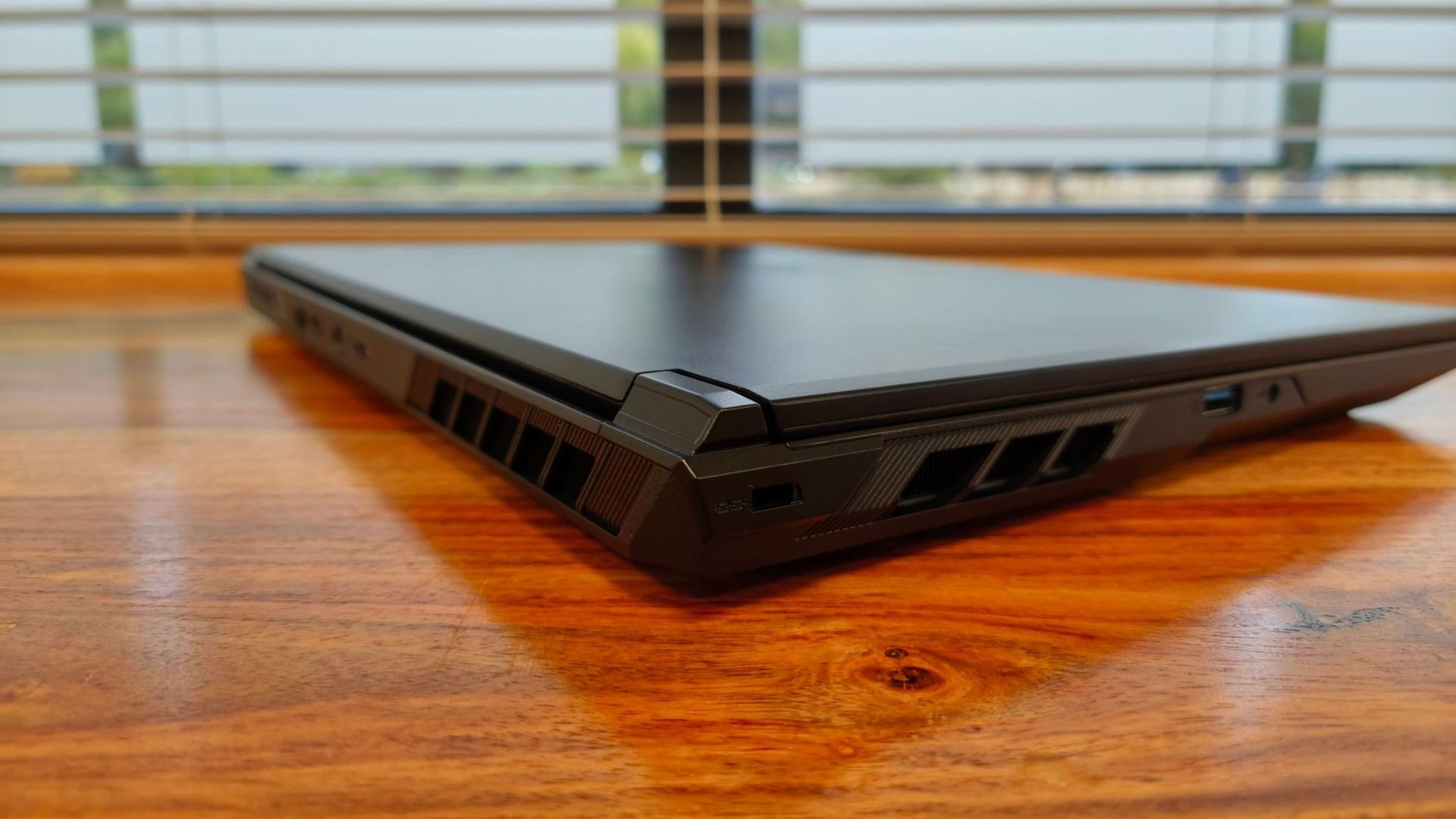
Weighing in at 6 lbs and measuring 1.04 inches thick, the 17-inch chassis occupies a substantial footprint. While it can be tucked into a backpack, it is not built for effortless daily travel. The upside of this expansive frame is generous port placement. The rear houses the power input, an HDMI port, an Ethernet jack, and a USB-C port with DisplayPort 1.4 support. Additional connections include two USB-A ports on both sides, a headset jack, and another USB-C port supporting both DisplayPort 1.4 and Power Delivery.
Display and Performance
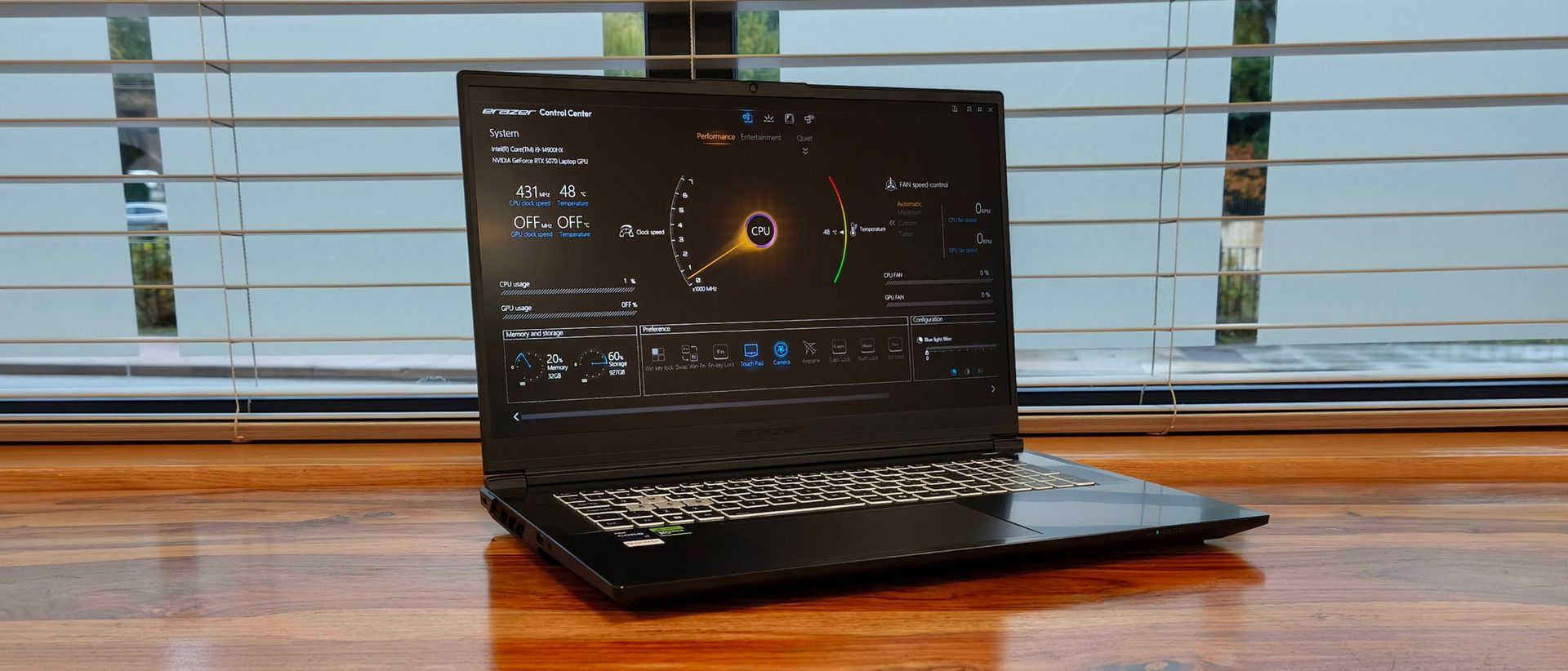
The laptop features a 17.3-inch IPS LCD screen operating at a 1080p resolution with a 144Hz refresh rate. Although it lacks OLED technology and higher resolutions, the panel delivers impressive vibrancy and contrast that make games look lively, while the pixel density remains sufficient across the large display area.
Under the hood, the base configuration pairs an Intel Core i9-14900HX processor with an Nvidia GeForce RTX 5060 laptop GPU, 16GB of DDR5 RAM, and a 1TB SSD. A higher-tier version costing £1,899.97 upgrades the hardware to an RTX 5070 and 32GB of RAM. During testing, the machine handled demanding AAA video games at very high frame rates, consistently pushing past 60fps on high graphical settings. Intensely demanding titles like Cyberpunk 2077 ran smoothly at lower ray tracing presets, though maximum ray tracing settings naturally reduced frame rates.
To manage thermal output, the internal fans spin up frequently during performance tasks. This creates a persistent fan noise, but it successfully keeps internal temperatures controlled alongside the numerous ventilation outlets.
Battery Life and Verdict
Battery performance aligns with typical expectations for large gaming machines. In standard continuous movie playback evaluations, the device lasted for five and a half hours. While this edges out some competing models, it remains short-lived compared to select alternative brands. Fortunately, recharging takes between an hour and an hour and a half.
Ultimately, the system succeeds by keeping costs down while retaining the raw processing power required by modern gamers, establishing it as a practical option for UK consumers seeking a spacious display and capable hardware package.